From PDF guideline to living system: adaptive identity, AI-ready assets and sonic branding
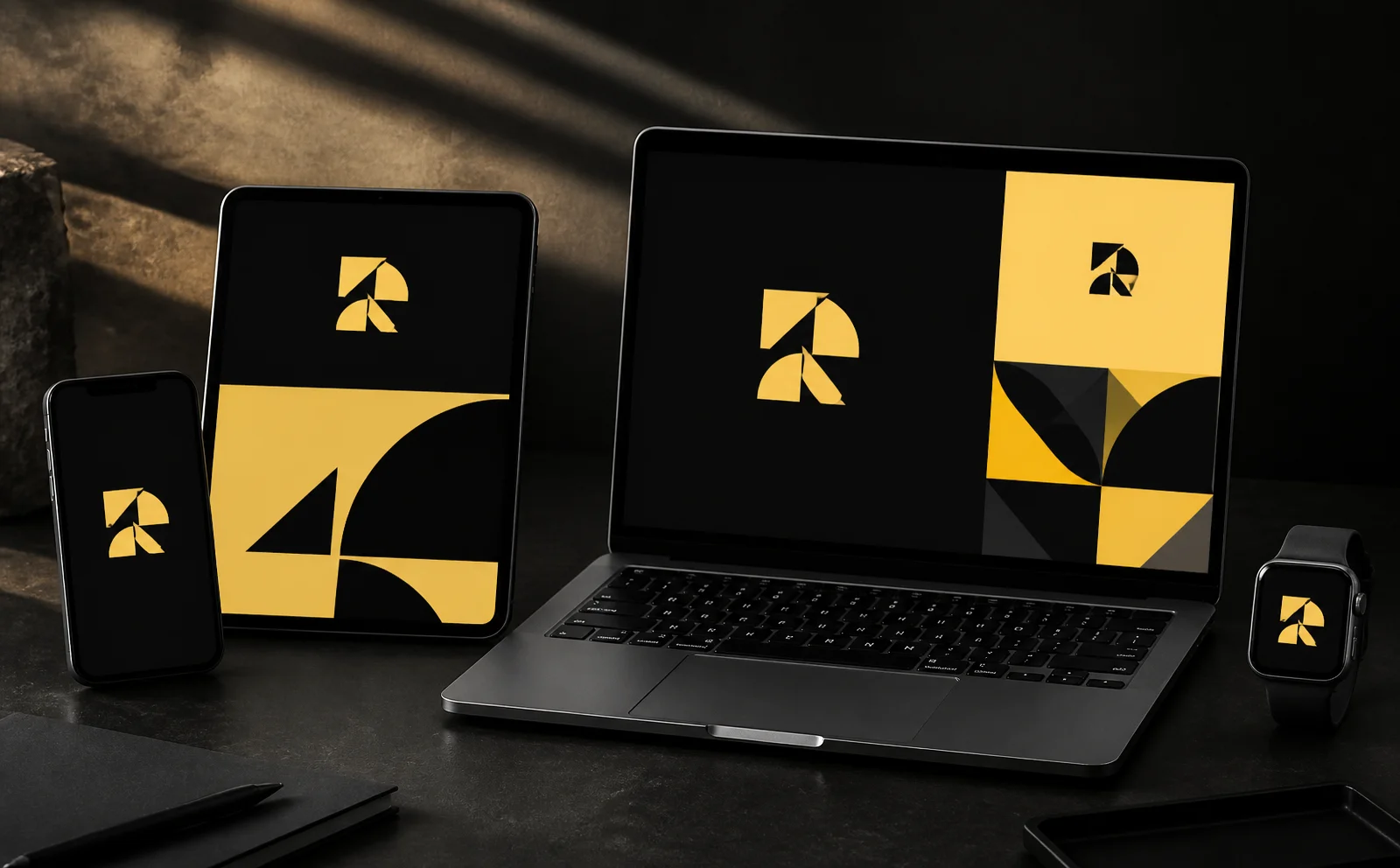
A 2026 identity is no longer a guideline file on a drive. It is a system that flexes with context, connects to digital asset management, has guardrails for AI, and has a sound.
Most brands are still handed over as a PDF guideline. The problem is that the world a brand operates in has changed: dozens of digital touchpoints, many teams and partners producing content, and more and more AI tools involved. An identity only holds up when it is a system you can use every day. This piece collects the directions taking shape and how Double D reads them.
A note on sources: most are trend pieces and promotional content from agencies or platforms, with no independent adoption data. We use them to spot direction, not as measured evidence.
1. Adaptive identity instead of fixed templates
2026 analyses describe systems that flex without losing recognition: a logo may adjust scale or layout depending on where it appears, type flexes with the frame, color adjusts to context. The spirit is to keep a fixed core and allow variation around it. Flexible does not mean arbitrary: a successful brand is one people recognize even when everything around it changes.
Good rules say what must not change, so everything else can change with confidence.
2. Design systems meet digital asset management
An academic study comparing three platforms (Frontify, Bynder and Adobe Experience Manager Assets) found companies increasingly combine design systems with digital asset management (DAM) to hold brand consistency under growing complexity. The result is “Brand Centers” that gather guidance, assets and workflows in one place. For small and mid-sized businesses this can start far simpler: one consistently named asset folder, one set of shared templates and a short rules page instead of a thick book.
3. Design tokens: one source of truth for color, type and spacing
When color, type size, spacing and motion rules are defined as tokens, the same source feeds the website, apps and sales documents. Change one value and everything updates. This is exactly how we built this website: the whole type scale, spacing and color live in CSS variables.
4. AI enters the asset pipeline
The sources describe two layers. The first is AI-assisted production: generating variations, adjusting palettes for accessibility, trying many layouts. The second is new and small: a few open-source projects propose a standard for “AI-executable brand identity”, describing a brand in a machine-readable way. We treat the second layer as a signal to watch rather than common practice.
For both layers, guardrails matter:
- An unchanging core: logo, name, core voice and the rules that must not be broken.
- Human approval: AI proposes; the person accountable for the brand decides.
- Transparency: as audiences grow wary of fake content, honesty about origin is part of trust.
5. Sonic branding: from jingle to system
Sources treat sound as a rising part of identity. The general move is away from a one-off sonic logo to flexible sound systems, a musical framework that scales across platforms. A sound-branding firm reports that brands use stock music in 61.9% of content, which it links to brands sounding interchangeable (self-published figure, treat with care). Human voice is also growing, and AI voices are starting to speak for brands in assistants and synthetic narrators. The practical question for a business: what does your brand sound like in short video, podcasts and call centers?
A practical roadmap for businesses
- Audit your assets: gather logos, type, color, photography and templates in one place and retire old versions.
- Write short rules: one page for what must not change, one for what may vary.
- Turn them into tokens and shared templates: so the website, social and print draw from one source.
- Set guardrails for AI: which tools, for what tasks and who approves.
- Add motion and sound to the rules: so video teams share a standard.
- Measure: compliance rate, time to produce new assets, and brand recognition.
This is also how we hand over an identity project: not just a set of beautiful files, but a system your team can use from day one.
Sources
- Design Trends 2026: Building Flexible and Responsible Brand Systems — Renderforest
- Above: shaping future-ready brand identity through strategy, creativity and AI
- How We Build Adaptive Brand Systems with AI — Halcyon
- Top 10 Branding Trends to Watch Out for in 2026 — Design Shack
- Audio branding trends 2026 — Big Eye Agency
- Why Sonic Branding Matters More Than Ever in 2026 — Massive Music